Observation


3/11/14

Observation
 
By observing the area from different angles and aspects of it i found that it changed the mood and overall feeling of something that originally and at first glance seemed quite insignificant. this method of recording celebrates and amplifies the spirit of the subject matter, bringing them back to life almost as they become re noticed again. I crouched down very low for this picture with the camera on the ground in order to include the leaf that was growing out of a crack in the concrete floor as well as a low angle of the abandoned couch. This shows the urban battle between the struggle of plants trying to grow in man made areas.


ob·ser·va·tion [ob-zur-vey-shuhn] Noun
1.  an act or instance of noticing or perceiving.
 2.  an act or instance of regarding attentively or watching. 
3.  the faculty or habit of observing or noticing.

In animation it is important to become a great observer and to notice the minute. To study the world around you with all of its contents and complexities. This project is to start the process of observing and 'seeing' as well as looking. In the environments we find ourselves in there are many new things to discover. Some of the things we may pass by, at first glance perhaps their precious or interesting qualities not noticed. I am going to become aware, and notice these precious aspects of things. and record and save my findings in various ways.

flâneur/flaˈnəː,French flanœʀ/

noun
A person who saunters around observing society.

We are going to wander to Stockport's Market Square to a courtyard at the back of an art cafe called '7 miles out'. We will be "les Flâneurs". Explorers with the simple intention of noticing things, and noticing things that perhaps may not be immediately obvious. This task allows me to take time to notice things in small confined area narrowing my range of space to observe and there fore encouraging me to look deeper into this area. 
I will record my findings with a range of methods and materials such as papers, drawings materials, cameras, sound recordings, and impressions with clay to build my collection. I will use them to explore the place but also to explore the idea of "capturing". 

Leonardo Da Vinci 1452-1519:

Leonardo was a great observer. He excelled in many areas, his range wide and way ahead of his time in a broad range of areas. He closely observed the body and how the brain worked and the circulatory system. His findings of these topics became the basis of research today. 
He was one of the most famous, inventors and scientists who ever lived. His energy was limitless when i came to asking questions and searching for answers and on top of this he was the master of observation, which led to more questions and discoveries. He had a strong desire to learn as much as he could about everything he observed. He learned from experiencing, experimenting and observing everything he came in contact with. 


“The average human looks without seeing, ! listens without hearing, touches without feeling, ! eats without tasting, moves without physical awareness, inhales without awareness of odour or fragrance, ! and talks without thinking.”!
- Leonardo da Vinci 

Elliot Erwitt Newyork City 2000:

Elliot Erwitt is a photographer from France who observed the world as he walked through it searching for moments and timing, taking into consideration the angles and positioning of an image and the importance that all of theses have combined. One of the subjects Wdward frequently photographed through out his career was dogs. This picture below is one of his photographs of observation.
Since the 1970s, he has devoted much of his energy toward movies.
This photograph shows an image that has not been digitally manipulated or manipulated in any way, but shows how the photographer has taken an observational recording of a situation at just the right time and angle to capture this moment in a certain way making it seem as though the dog on the persons lap is actually the head of the person with a human body. 


"To me, photography is an art of observation. It's about finding something interesting in an ordinary place... I've found it has little to do with the things you see and everything to do with the way you see them."
- Elliott Erwitt! 

Scene from American Beauty Directed By Sam Mendes:


This short clip from the film shows the observation that one of the characters from the move made and how by observing the dancing plastic bag he brought it to life, noticed its precious qualities, if movements how it flowed and gave it human characteristics by describing it as a child and by saying it was playing. This way of describing and viewing the inanimate object most would see as just rubbish, gave it a personality like a human would have and gave it life. 

My Own Observations: 


When visiting the courtyard there was not much space to observe as it was a small confined area that had been left untouched for some time. My task was to observe and record unnoticed aspects of the area and small sections of interest and this idea of being in a confined area allowed me to delve deeper into sections of the area rather than being overwhelmed with subject matter of a large area. I wanted to observe the textures of the area along with the shapes and spaces within it and also the inhabitants of the area such as the creatures that had moved in and made it their home due to the lack of human interference such as the numerous spider and insects that had made their homes here.

I wanted my recordings to show the atmosphere of the place and the components that make up this area to give viewers a sense of the place and show them a more in-depth view, delving deeper into the perhaps less noticeable observations rather than showing the area as a whole. This way the viewer can feel each aspect of the area individually and build up their own overall feelings of the atmosphere and personality of the place. Almost like a more forensic unraveling of the courtyard.
To do this i recorded my findings in various ways, making sketches of the natural structures in the area and broke/ chipped fragments in the wall, i made rubbings of the various marks and textures of the area and used different materials to capture and symbolise the atmosphere of the place.
I found that when recording

These are two images i took while observing the courtyard i was in. I recorded them by taking photographs, a very literal method of recording, however i took them from unusual angles and of unusual subject matter such as the top image which show shows an image in which i positioned the camera from underneath a small tunnel in the side of a wall of a spider web, to show the perpective of this section of the are that the spider may hve, giving the audience a diffrent point of view. This shows how i have used an extreme close up and angles and positioning to show a new approach and perspective of the area to the viewer which celebrates a very noticed yet intriguing section of the place. The second image shows how i have used black and white photography to emphasise the contrast i found in some areas. the effect of taking pictures in black and white is that it reduces all the distractions of colour in the image and shows clearly areas of high contrast but also emphasises the textures on the floor in this image. Again i took this picture in a perhaps unusual side angle in order to prevent the audience slightly from seeing the image literally (as a couch near a sheet) breaking the everyday connects made with the image at first glance and allowing the audience to sense the atmosphere of the image and so see the textures, lines and shapes made by the area, rather than just to look at recognisable objects that are easily dismissed. The image requires more thought and deeper observation that just first glance due to its angle and so starts to make the audience themselves observe this area in a deeper way.


These are two more of the image i captured at the courtyard. The top image shows another example of contrasts in the area between light and shadow and creates a rather humble effect in the this image i think as the small spotlight in the abandoned dark gloomy surface highlights the subtle mossy textures that can be seen in the image showing the formation of life on the crumbling bricks and emphasises the organic nature of the textures in this image. There is also an element of movement in this image created by the line made by the edges of the bricks in the middle of the image which travels to the top of the image and shows perspective. this line leads the eye along it and creates an aspect of movement. It also shows some repetition as the eye leads along the line due to the fact that the bricks are in town and repeat one after another along the line.
These two images were the most straightforward images i took with regards to how the audience will view them as straight away we see the couches and know what they are with out having to look any deeper into the image etc. However i liked the feeling these images had and the qualities they possessed with the message they portrayed about the area and their literal appearance helped with this. I think these images show the overall feelings i got from the area of abandonment, with traces left and clues that show how it used to cared for at one point. This image of the chair shows the regal design of the couch and its form and textures still intact, however the viewer can also see how the chair has become weathered and broken and now sits abandoned in the urban outdoors, however even so, the image still shows a humble and even charming appeal about it, with the contrasting textures and subtle tones of washed out naturalistic colours. This image shows how the abandoned objects can still be captured as precious and how their spirit can be revived through observation.
The top image of these two shows text in the top left corner behind the curling barbed wire. the curling of the text reflects the curls of the wire. These two images of the same area next to each other shows the contrast of the elements inside it however with one main theme of 'abandonment'. The wires suggest a more industrial and urban environment while the spider web show a more natural and earthy environment. 

Slide Show of all the images i took for my observational recordings:


Time-lapse Videos i captured of the area:

This video is showing some of the movement in the area. The movement is subtle and simple, of a piece of leave attached to a string of spiderweb swaying slightly, it suggests the simplicity of the area with regards to the fact that it has been pretty much untouched and emphasises this feeling of loneliness and abandonment about the place as this is the only movement i show of the area and so gives a feeling of no business or human interference. This video also gives the visual perspective and point of view of the small inhabitants of the area such as the spiders (keeping up with my reoccurring theme of spider webs).

This image is a timelapse video i took of a worm moving through soil on the floor. The effect of it is a twitchy hard to focus on almost eery short clip as it shows the dirt around the worm and the organic form of the worm itself. This is showing a more naturalistic view of the area and its inhabitants, but also displays an uncomfortable atmosphere that reflects the subtle uncomfortable feeling of the courtyards mess and abandonment.

Some of the drawings i recorded of the area (can be seen in sketchbook): 

This is a charcoal rubbing i took of one of the textures in the area. This was the texture and form of a rusted grid on the floor. The effect of using charcoal creates a gritty dirty appearance and reflects the nature of the grid. This idea of rubbing to record an image, is directly recording each fragment of the subject while still maintaining a rather abstract and not completely figurative appearance of the grid. 

Drawing i made to represent one of the spider webs i noticed and recorded.

Drawing i recorded of another spider web that leads into a hole in the wall. 


In the courtyard there were wires along the walls that hung limply and as though they were about to fall off. I drew the lines made by these wires and overlapped the different trails made by each of them to make an abstract representation of these wires. The creases in the tracing paper represent and suggest the cracks in the wall behind the wires. 


05/11/14
Displaying my work 

I placed my display under a desk as it is hidden away slightly and the viewer has to crouch down to see it. this in a way reflects the nature of the area and my experience of the area as there are many hidden aspects of the area that are interesting and when finding these i had to move around, crouch down lean over things to observe some hidden parts of the area as opposed to just walking round it staying at a constant height.


These photographs show how i have hung up my elements and recordings in my display area, some of my recordings can not be seen such as two small screws i hung up from the ceiling of my display that i collected from the courtyard and brought back with me. I also had my videos playing at the back of this display however i had to move them by the time i photographed my display. 

I arranged my display in a way that would represent the area as a whole even though i only recorded small individual section of the area such as the numerous spiderwebs. i organised my findings in a way that they were spread out with in the area. For example i have placed many of my spider web recordings hanging from the roof of my display as most of the time they were up fairly high and hung. i have placed my recordings of the old couch at the back of my display as this is where it was situated in the courtyard. there were also some wires that hung on the wall of the courtyard, i made drawing of these and placed them on the walls of my display. I chose to have my display in a this section underneath a table as it creates a darker environment and emphasises this gurney abandoned feel that the courtyard gave to me, and allowed me to reflect my experience more clearly.
The way i organised my work in this section is layered. Some of my work is behind others, meaning that the viewer has to look further to see more of my findings. This represents the area and the nature of how i recorded my work with regards to the fact of the more you look, the more you find.

Foley

13/10/14

Foley

A foley artist (AKA foley operator) is a person who creates foley sound effects. 
Deffinition:
Fo-Ley
1. A technical process by which sounds are created or altered for use in a film, video or other electronically produced work
2. A person who creates or alters sounds using this process.
(after Jack Foley 1891-1967, pioneering sound effect at universal studios in the 1930's)


Foley is the art of recreating incidental sound effects (such as footsteps) in synchronisation with the visual component of the movie. Named after an early practitioner. Foley artists sometimes use bizarre objects and methods to achieve sound effects, e.g snapping celery to mimic breaking bones. The sounds are often exaggerated for extra effect, fight sequences are almost always accompanied by loud foley added thuds and slaps. Sound is a vital and vey powerful component within the production of film and animation. It can enhance the overall experience exponentially.

For this project i will be given a sort film sequence and i will record my own sound effects and add them to the film. 
I will watch the sequence fist and decide where i think sound should go and what type of sound it should be. I will identify ambient sounds and, soundtrack and foley. I will consider how i will create the sounds i need with regards to props or actions and what locations if need be they would need to be recorded in (eg road for traffic sounds). I will not however watch the origional sequence with sound, as this could cause me to simply try and coppy the sound add in the origional animation as opposed to thinking my self about what the sound could be, what would fit in and what would work best.

 Gary Hecker Doing foley sounds:

This video show how foley artists work and how unusual objects can be used to made the desired sound for the film. 

i decided to look at examples of foley artists who have created sound for animation as the short clip i will be working from is a clip from the animation Wall-E.
Interviw with Gary Rydsrom, Sound designer on Toy Story:


This video shows how cartoon animations can in a way have their own separate world to create with the sounds not necessarily always having to sound so realistic as with films that involve people and recorded shots of acting location dialog etc. The Foley artist for animation can use more bazaar sounds and the nature of the cartoon world will create a sense of different laws of the world for the audience and there for making the audience believe in that world and the sounds within it this can be heard even in the dialog of the actors speaking for the characters in the animation of toy story. One example shown in this video is the part when the artist is trying to record a sound for bulseye the toy horse licking woody's face. The noise he uses is is an over the top sloppy loud licking sound, and he uses the noise of a cows long sticky tongue licking peanut butter to get this sound.


This is the sound i made and added to the short clip for Wall-E.
The clip involves a lot of metal and so when looking for objects to use to make sound the metallic objects were the go to objects. I looked at each of the movements within the clip and decided what sounds to make. The heavy door movement in the scene when the door opens and hits the ground. i used an electric razor to make this sound (the same noise i used for when wall e moved as it made a robotic buzzing sound that was effective for this movement) and slowed it down to sound like a heavy machinery sound and to emphasise the slow movement of the door and its weight. this  noise leo sounds a bit echoey and the metal building it is attached to would vibrate and echo slightly as this was move and so again this noise was very effective at this point. Another noise i created for the door movement was metallic squeaks to suggest rusted metal forcing past each other and friction of metal as it moved. I made this squeaky rusted sound by rubbing the wires of a head massager against metal.
Metal head massager:
There were small sounds to consider swell such as when wall touched or grabbed things i added a small metal noise that sounded like his metal hand grabbing whatever it was. Also there was a part in the animation where he brushes something off him straight after he moved the metal strips around near the door. I added sound for this which was simple scraping of two metal objects together quickly.
Over all i think the effect of this piece is good as the sound is all in time with the actions that happen in the animation and they sound like the actions being perfumed.
I used a variety of different types of sound such as ambient sound with the wind at the beginning, foley sounds such as the metallic clanks of when wall e touches things and also music, when wall e turns on the music play and music plays. I have also experimented with overlapping different types of sound when i had the music and the foley sounds playing at the same time when wall e is moving around and doing things while the music was playing. I made sure that the two sounds didn't sound too busy together and that they were the right levels in comparison to each other.

 Running a spoon along bumpy metal to make the noise for wall e cranking to when he needs to reach the light switch and the tv. the bumped metal noises one after the other makes a mechanical cranking of levels sound.

Some of the objects we used (mostly metallic). 

Floey Performance

20/10/14


Live Performance

For this project i am going to be further exploring the possibilities of sound to add new depth to the Pixilation Shoot i did with my group previously in my projects. 
We will be working again as a group to add the foley sound effects to our short film that we all collaboratively made in project 1. However we will approach adding sound in a slightly different way and will "preform" the foley sound in a live performance. This means that we will have to be aware of our bodies in order not to make background or unwanted noises in the performance and also means that we need to know where to stand and what order we will perform in with regards to where the microphone is (different sounds need different distances from the microphone as the sound can not be made to be louder or quieter like in premier, it must be the right level of sound) We also need to make the sound right on the point in the animation where the sound should happen, meaning we must be aware and keeping track of timing. Organisation will be a big aspect of this task. 

We will watch our animation that we created as a group and create a table to note down all the sounds that need to be considered and possible props we could use to make the sounds, we will then delegate who will be responsible for each of the sounds and work out the order and timing of them, this will come more when we practise the performance a couple of times.


Today foley is still used in radio, however the decline in popularity for the radio has cut down that work significantly as well as the fact that sound effect libraries mean that not much foley needs to be performed live. For film foley artists, they are given the media they need to make sound for and can record each sound and then even edit the sound after to perfect the sound they need for the film for example footsteps and cloth sounds etc. However in live theatre the foley technique is fairly different as instead of perfecting one sound it is the artists job to do as many as possible as good as possible on the spot. The emphasis in the sound become almost visual and really adds to the atmosphere and visual aspects of the performance and in some cases can make a situation more clear in what is happening at that time. However as the performance is live and on a set there are also safety hazards to consider which the artist in the video about explains for example he mentions that it is unsafe to have water on the set and so he has to come up with a way of creating a splash sound with out using water. This shows How foley makes the artist think more about what they are using to make a sound and how they can manipulate objects in various ways to create certain sounds. 


The productions of Waves and ...some trace of her approached the use of sound in a very different way to conventional theatre. This film looks at how multimedia productions can incorporate the techniques of radio plays into live theatre by using Foley sounds in their live performances to add a theatrical performance  the plays and to emphasise all the noises .

This video shows the high impact that foley has when doing a live performance. It shows examples of some of the methods the actors used to create sounds for certain scenes in the performance such as the pages of a book burning it shows the woman crumpling paper to create a crackling sound. With out this sound the emphasis on the destroying crackling flames would not exist and the scene would not be as dramatic and powerful. The sound create a feeling to a scene and draws the audience in as though they are fully involved (all the senses are being engaged) 


This is our Pixilation "Big Shoot" animation we will be working from :

We decided to consider the aspect of using lateral sound as well as literal to create narrative in some ways and to have a sound that represents something in a less literal representation. For example in the animation we will be making sound for the actor when she makes glasses appear over the face like magic. We decided, after looking at some of the props we had to work from, to use a harmonica tune to represent the appearance of the glasses and to emphasise the almost magical cartoony nature of the animation.

The added sound and our live performance: 

The video shows how we had organised ourselves in order for each person to be ready to make their sound for the different parts of the animations. This was a fairly tricky animation to add foley sound to as in the first animation the clips of the letters over lap and so at points it sounds like there is possibly too much busy noise happening in the animation in contrast to the simple appearance of that animation and possibly takes away from the humble qualities of the animation perhaps. however we were all in time mostly for this and worked well as a group and the task was a good experience overall of having a go at live foley. For the second part of the animation we added sound to the 'seasons in motion animation'. This animation happened rather quickly and so again was a fairly difficult timing wise animation to add sound to it and it meant we all had to be very aware of what time we made our sounds and order of events happening in the animation. Considering this i think the results were rather good for this project and it was good fun experimenting with various objects to make these noises along with performing it as a group. 

Foley Atmospheric & Spot Sound

20/10/11

Atmospheric and spot sound


For this project i will be creating my own sound track to my moving compositions i made in an early project i did (Compositions in time) And i will add sound to the entire sequence of the animation i created. The emphasis in this creation will be on creating an atmosphere and mood to go with the theme and emotion of my composition. When used well sound can suggest meaning to the audience beyond what is being visually offered to them. 


'The Bog' By Charley Spring (eerie atmospherical music):
 This is a video i found that displays an example of how sound can be used to portray an emotion or atmosphere (even without visual aspects sound can have this effect) the video displays an array of atmospherical sounds that are slow and deep and slightly vibrated. There are the occasional higher pitched noises to create an uneasy feeling all of the sounds create a tense potential dangerous feeling due to the nature of their noise. 

Foley sound can also be used to create various feelings with regards to using noises for example to as scratching or "nails on a chalk board" squeaking noises that create an uncomfortable feeling due to the uncomfortable nature of the sound itself. I will not be using music in my animation to create the sound to go with my animation however i will consider noises that create the correct feeling intended to go with my animation for example for my threatening moving composition i should consider using deep slow sounds and possibly even using scratching or squeaking noises to create that uncomfortable sensation and emphasise the emotion and atmosphere of my moving composition. 


This is the sound i added to my threatening moving composition. I started off using smaller sounds of crumpling a plastic bag to make a crackly sound and by scratching a head massaging device against a sheet of metal so make the screeching squeaky noises. Both of these noises sound quite eery and so set a tense eery feeling for this composition when combined with the dark enclosing frame. (i slowed down the squeak noises in premier making them sound lower than they were originally slightly however this made them slightly more subtle and more sinister). The next sound in my composition starts when the shapes start to move in and its sound is a low eery dragging noise/ deep humming noise. I was very pleased with this noise and i created it by recording my self drag a heavy chair across the floor on one leg at an angle (this created more drag and there fore a loud enough sound for the microphone to pic up and also creates a gloomier more sinister sound of a heavy object agonisingly dragging across a surface) i then slows the sound down to 50 percent and this even lower humming sound was created that sounds almost like a paranormal wind/ echoing. I also kept the crumpling sound going on at this point however slightly quieter so as not to over power the the humming sound i also kept the squeaking of metal noises travelling at this point and then added another slower version of the squeak to create the ringing noise at the end of the animation. As the animation travels i make the sounds get louder and less comfortable i added a further scarping scratchy noise i made by dragging a container across a textured plastic surface to increase the sounds towards the end of the animation and i also made the humming noises get louder along with adding the high pitched ring. This increase in noises reflects what is happening in my animation with the dark shapes slowly threateningly engulfing the white space and swallowing more and more of it. This is what the sound is reflecting as the sound slowly starts to get louder and more uncomfortable as the uncomfortable sensations rise in the animation and it amplifies this feeling of threat. Also the sharp squeaky metallic noises that run through how reflect the sharp edges of the shapes and exaggerate them this could also allude the audience to stop seeing them as shapes and see them as knives almost creating a more sinister appearence.

Like in Charley Springs atmospherical music piece my sound that i have created using objects is slow and has a low humming/ vibrational sound to it, This sound creates quite a tense feeling as it is slow and rather dark / unearthly sounding creating this feeling of strangeness and uncertainty. I also involved the occasional higher pitched noises when i involves the squeaky metallic sounds in the background, similar to how Spring uses higher pitched notes in his piece to break it up slightly and add moments of heightened intensity and threat.


Composition - Time

7/10/14
The Effect Of Motion On Composition

Composition is further achieved by the addition of time allowing compositions to move through multiple states using rhythm and pace to accentuate the emotive experience. Repetition enables the use of visual pattern whilst motion further develops compositional play. 

For this project i am going to be creating a short series of stop motion animations that play with composition. 
I will use starting points that i developed in the previous project (Composition Static) I will identify the compositions that i think are the strongest and would work best to animate.
I am going to create short sequences that accentuate and communicate further the intended feeling. I will consider how the addition of time might add to this and how i can reach the movement the composition created for the word. 

Composition:
com·po·si·tion [kom-puh-zish-uhn] Noun.

1.  The combining of distinct parts or elements to form a whole.
2.  The manner in which such parts are combined or related.
3.  The result or product of composing; a mixture or compound.
4.  Arrangement of artistic parts so as to form a unified whole.

Time:

NOUN 
1 [MASS NOUN] The indefinite continued progress of existence and events in the past, present, and future regarded as a whole: 
travel through space and time one of the greatest wits of all time

6 [MASS NOUN] The rhythmic pattern of a piece of music, as expressed by a time signature: tunes in waltz time
SYNONYMS rhythm, tempo, beat, pulse, flow; metre, measure, cadence, pattern; accent, stress.
The tempo at which a piece of music is played or marked to be played.

ANIMATION IS ALL ABOUT TIMING
The definition of “visual” rhythm: movement by the repetition of objects
Could this, by it’s very nature, be animation?
Key


By this definition.ANIMATION IS RHYTHM


Definition: “visual rhythm” 
movement by the repetition of objects


visual patterns emphasizing repetition the alternating light & dark areas lead the flow of the eye when drawn across an image.


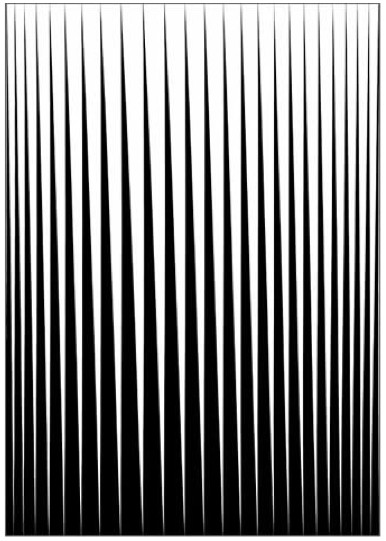
 Bridget Riley ‘Breath’ 1966

Movement of the eye is directed across the page and up and down the page by the alternating light and dark areas and the shapes they create together repeatedly lead the flow of the eye along with them one after the other etc. This is showing visual rhythem in the image. The shapes in the image also create that of sound waves in a way and emphasise this idea of visual rhythem and therefore shows a good starting exaple. This piece also shows some illusional qualities. 


Definition: “progressive rhythm” - 
the shape & size of the pickets in the fence appear to decrease from the left edge of the photo to the right edge.
The perspective of the image suggests quicker shorter movement towards the right of the image as the eye travels across it from the larger shapes created by the fence to the smaller shapes. The shorter lines making up the shapes on the right and gradual lac of space between each shape suggest that the movement is getting faster as the eye travels left to right across the image. 


Bridget Riley ‘Intake’ 1964

shows a similar example of the idea of movements in still image and progressive rhythm in an image, as the lines she shows get smaller towards the left of the image creating perspective and faster movement. 


The pronounced slant of a line gives it dynamic quality. The dynamic force is enhanced when the lines are unequal lengths and with unequal distance between them. This diagonal line suggests movement. 


Definition: “linear rhythm” 
characteristic flow of the individual line


Wider shot and slanted perspective emphasise a visual "line”. This leads the eye from one side of the image to the other creating movement in the image. The eye follows the thick line created in the centre of the fence caused by shadow and space.


Bridget Riley ‘Movement in Squares’ 1961

This piece shows suggested movement and line in the image due to the positioning and sizing of the shapes. This creates and illusion effect and makes the image appear to be a 3D curved form either side of where the line is created and making it appear as though the line is a gap between the two curves. This leads the eye up and down the line but also around where the curved illusions are created around the line. Following the suggested shape with the eyes. 


Norman McLaren Lines Vertical 1960


McLaren's has used the movement of the shapes to create a certain mood or feeling. the colours and the simplistic movements that overlap and aline, creating balanced compositions within the frame are creating a tranquil atmosphere. the music he has added to this piece shows this feeling portrayed as well and exaggerates it.


THE USE OF SPACE
Spaces between the forms, or the negative shapes, play just as great a role as the positives and they enable you to check the accuracy of your drawing. The positives make the negatives and negatives make the positives.
Stan Smith, Landscape painter


Use of positive and negative space & strong contrast for compositional effect, visual interest, narrative structure and atmosphere. 


Ruth Lingford 'Death Of a Mother' 1997


Norman McLaren:
“Movies move! How it moves is as important as what moves.”


This is a video i found where the artist in the video is showing the viewers how to create a jerking walk illusion that looks very suited to the horror genre and has been used in various horror films to create an eerie uneasy feeling and to add a sense of horror to the film such as in 'The Ring' this technique has be used. I thought this was a good example of how movement itself can portray a feeling and add narrative and atmosphere to a visual piece of work. In this video by simply having the actor moving in a twitchy unusual way and 'contorting' the body in strange positions as they walk this can create a very uneasy look to the scene, and creates an unhuman like appeaerence and therefore adds mystery and fear. As the creator of this video mentions when talking about how to create this effect, the way in which the actor moves effects and has an impact on the audience to create this feeling of horror and this same idea of movement could be looked at with regards to moving a composition of shapes (which is what i will be doing in this project). The idea of having shapes in a composition twitching and jerking in similar ways could also have this effect on the audience to some degree. 

What I Did:
I decided to chose my threatening, tension and euphoric compositions to explore movement and capturing the essence and nature of the word in the movements of my animations as well as the static compositions i have created. I will then, if i complete these and am happy with them choose others of my compositions to move if i have time. 

Threatening movements:

Sudden fast movements, slow to build tension and rise the feeling of threat. All shapes closing in on the white space. 

I created some thumbnail story boards in my sketch book before i started creating the movements for my threatening composition on istop motion. This was my first attempt:

My thought process behind this moving composition was to have the thick dark boarder close in on the frame to start with, to create an uneasy feeling right from the beginning of the clip. i then made the pointed shapes move in from the dark boarder threatening to close in on the light space within the frame. Then i made the shapes move back into the boarder slightly, fairly slowly, and had them jolt back in towards the centre of the frame in stabbing motions to create increased feelings on tension and danger i then had all the shapes push into the line in the composition threatening to break it however not breaking it as this would end the treat and turn it to action. 
I decided however that i was not happy with these results. I think that the shapes moving back into the frame, gave a release of tension and threat and some breathing space, however i wanted to create a building sensation of tension in my piece. Also i think that by making the shapes touch and stab the line in the composition this could actually be the end of the threat in the piece as it could look like the shapes are already attacking the central line and there for no long only appearing to be threatening. 

This was the next attempt i created to try and give the feeling of threat that i wanted. I made the entire thing move more slowly and made myself have more control over the movements and how slowly they move. I made the whole frame move in very slow to create a slow building feeling of threat and increasing darkness. i then made the shapes move out of the dark frame still moving very slowly, and twitching slightly as they move in to create feelings of unease as this is an emotion that comes with the feeling of threat. I had the line in the composition slide in quickly more so just to experiment with different levels of speed in the composition than anything as i still had the sharp shapes moving slow when this happens however the effect worked. I then had the frame and the shapes squash in even more closing in on the light spaces to an extreme amount and rising the feeling of suffocation and threat of suffocation and threat of darkness. 


The previous video unfortunately shows my hand in parts and some masking tape on the edges in parts which i had used to secure the card i was working with (so that things didn't move that were supposed to stay still as i was creating my animation). Thank fully as this animation was was pure black in the areas where these things shows i was able to simply mask them out in photoshop on each frame. I also adjusted the levels to correct the lighting and light balance error at the end of the video where all the shapes go greyish and show where they overlapped etc as this ruined the intended feeling of the finally and build up to the finally of increased threat. 


Tense Movements:

The idea i had behind these movements was to have a contrast of fast and extremely slow pase of movement to amplify the tense feelings when the shapes moved slow about the touch and getting closer and closer to each other. And to draw out this time of when they would touch to increase tension. This means that there is a tense space and tense sensation of time both being shown at the same time when i make my shapes draw up close to each other. However my overall movement of this animation was far too fast and the same atmosphere is not created because of this. The pace of the movement of shapes at the end needs to take even longer i think to really emphasise and exaggerate this feeling of unbearably close tension yet no touch to draw out and the extended length of time is what will enhance this. 


In this moving composition i used the same idea as the animation i made previously for my tension composition, however i made everything much slower and more drawn out and i also made the shapes push backwards when the rectangle gets close to the smaller square however still not letting them touch creating that feeling of tension and almost magnetic repulsion being forced and squashed towards each other with the repelling tension in between them. I then make all the shapes move back towards the left once the larger square meets up with the rectangle at a very slow past again creating an extended feeling of lack of resolution of touch and therefore amplifying the tensions.

Again this animation had a couple of masking tape scraps present in the side of the frame and so like i did with the threatening composition i removed these mistakes in photoshop frame by frame. This created an overall more organised and simplistic visual effect to my pice with less distractions contrasting inside the frame and therefore drawing all attention to the movements of the composition itself and allowing my animation to deliver its message and feelings at full capacity.